Monday, July 16, 2012

Sisterhood

Snow White and Rose Red
One of my favorite Grimm’s Fairy Tales growing up was ‘Snow White and Rose Red’.  This tale is not to be confused with the much more popular ‘Snow White and the Seven Dwarves’.  The Snow White of ‘Snow White and Rose Red’ is a different character, with a distinct background, personality and story. 


Snow White and Rose Red are sisters who live with their widowed mother deep in the woods. Together they befriend a bear in winter time and rescue an ungrateful dwarf from a variety of unpleasant fates.  Little do they know the bear is actually a prince under a curse cast by the dwarf.  Each time they rescue the dwarf, they inadvertently take away some of his magic. This eventually results in the bear being able free himself from the curse by killing the dwarf.  The prince takes Rose Red as his bride, and as luck would have it, successfully matches up his brother with Snow White. Both sisters not only live happily ever after, they live happily ever after together.


The Ingalls sisters:  Caroline, Mary and Laura
Sisterhood is a repeated theme in many tales, and it has always appealed to me. Growing up, I was an avid follower of the Ingall's sisters in Laura Ingalls-Wilder’s classic Little House series. 

When as an adult, I read The Other Boleyn Girl by Philippa Gregory, what impressed me most was not so much the retelling of Anne Boleyn’s story (after all, by then I knew how it all began and how it all would end), but the exceptional skill with which Gregory captured the essence of sisterhood:  the love, the admiration, the jealousy and rivalry, the bond of blood and affection capable of withstanding almost anything, even the fatal political and sexual intrigues of the court of King Henry VIII. 


I wasn't very happy with the film interpretation of Gregory's
novel, but Natalie Portman and Scarlett Johansen made
for a nice-looking pair of sisters.

More recently in the Hunger Games, the power of sisterhood has resurged with Katniss Everdeen taking the place of her sister Primrose, and becoming a hero – oops!  I mean, a heroine -- before even stepping foot inside the Games. 


I have been blessed with having a sister; so every time I read a story about sisters, I’m reminded of that relationship, and all that my sister has meant to me and given me over the years. Love, encouragement, faith in my ability to achieve my dreams, an example to aspire to, someone to care about, support and depend upon.  Big sisters are especially wonderful because they so often serve the role of pathfinders. They are the ones who forge ahead into life’s unknown territories, and come back to share their wisdom with younger siblings. 


Katniss and Primrose from The Hunger Games have recently
been added to the list of famous sisters

In Eolyn’s world, sisterhood also has a special meaning.  Eolyn herself has no biological sisters, but in the tradition of the Magas, all followers of the very first maga, Aithne, are sisters in magic.  For the Magas, sisterhood transcends boundaries of time, place and bloodlines.  One can even speak of ‘sisters’ who lived centuries ago. The Magas believe that all practitioners who have passed into the Afterlife continue to watch over their sisters in the world of the living.  So while Eolyn is on her own for much of her journey, she is never truly alone with her magic. 


These are some of my thoughts on sisterhood; it’s importance in our stories as well as in our lives.  Now it’s your turn.  What does “sisterhood” mean to you?  Who are your favorite sisters in fiction and history, and why?  How have your sisters, in blood and in spirit, made your life easier, more interesting, more fulfilling? 

Posted by Karin Rita Gastreich


The Munro sisters, Cora and Alice, from the film
The Last of the Mohicans.  Like many sisters that live on in our
imaginations, their fates will not be happy ones.

Monday, July 9, 2012

The Role of the Hausfrau

What a maligned role it has been--the hausfrau, the housewife, the keeper of the home always ready with a gentle hand, a warm bowl of something hearty, wisdom. She's quick with a broom and to stitch up a wound. She's most often a supporting character, by her very nature, because it's what she does--she supports. She succors. She cooks and cleans and wipes noses. She is the Eternal Mother, and everyone hates her.

No, I'm not a fan of Freud.

Hate is a strong word; let's call it dramatic emphasis. She's been picked apart so often for being what she is, called a trope and worse. I've read criticisms of David Edding's Polgara, for actually seeming to like her role as caretaker of everyone she comes across, because she, being one of the most powerful people in that particular world, should be more. And though I do understand that this became a trope because it was most often the only role given any woman in a fantasy novel, (and in life!) I can't help feeling she's being overlooked, or worse, looked down upon, as somehow not interesting enough, strong enough, valuable enough for our fiction abundant with warrior women.


This is one of those subjects I, as a woman, a mother, and yes, a housewife, have struggled with through my life. I wiped the noses and cooked the food and kept the house while my husband brought home the paycheck that supported the household. Because he is him, I get to be me, and vice versa. It's traditional, for want of a better word, but it has worked for twenty four years.The key here is that it was a choice, not a societal mandate; and therein lies the difference.

I have spent way too much time defending the role I chose. There's no money, no prestige, very little outside validation of any kind. I've always been offended by the term working mother. I hated being asked, once my kids were all in school full time, if I was going back to work. The implication is there, no matter how innocently said; and this, I think, is part of what led to the hausfrau being one of those characters we just don't write.

But she's making a comeback, in a positive way. Can you guess who I'm going to cite?

Molly Weasley (Harry Potter Series.) She is a magically powerful woman. She can conjure up dinner, but she cooks it herself, for her family, with love. Her house is often a bit cluttered, but it's always clean. She tends her children, her husband and her home with the same ferocity with which she ultimately battles Death Eaters. Molly Weasley is the embodiment of mother, hausfrau, tender of the hearth and home--and she rocks.

Hausfrau is never going to get a starring role. Her very nature makes her a supporting character, not a starring one; but she doesn't have to be a trope either. We need more of her. We need to love her again, because Wendy Darling isn't acquiescing to societies expectations unless we impose that on her; and neither is Molly Weasley. It's just who they are. Without them, Peter and the lost boys, Harry, Ron, Hermione and all the rest would not have lasted long enough to see the end of their stories.


Got a hausfrau for me? Let the list begin!


Monday, July 2, 2012

The Value of Freedom

"Those who would give up Essential Liberty to purchase a little Temporary Safety, deserve neither Liberty nor Safety” –Benjamin Franklin

Franklin, Adams, and Jefferson working on the Declaration (Jean Leon Gerome Ferris, 1900) 
The anniversary of our nation’s declaration of independence is upon us once more. There will be barbecues, fireworks and celebrations. There will also be quiet moments of prayer and warm thoughts for those soldiers home and abroad, those who’ve touched our lives, and those lost in support of the value we Americans hold most dear: our freedom.

But what does it mean to be free? This is a question considered deeply by the writers of the Declaration of Independence, and one we ponder as a society on almost a daily basis. When does my right to free speech impinge upon the rights of others? Why is freedom to assemble an important right? More often than guns and bombs, the true questions of freedom are decided every day in a thousand small ways and venues, from quiet, civil conversations to demonstrations to court judgments. And in fiction, these themes are explored and discussed, turned over and examined, in our ongoing attempt to understand what the concept of freedom truly means.

This question has become a standard of modern Young Adult fantasy, best exemplified in the skyrocketing popularity of Young Adult fiction. The debate between freedom and security—how much is too much safety? What freedoms are we willing to sacrifice in order to remain secure?—is a running theme in these novels. Suzanne Collins writes in The Hunger Games, “District 12. Where you can starve to death in safety,” a comment that epitomizes this new, ongoing debate. The world in Allie Condie’s Matched trilogy is one of health, safety, and moderation. Regulated food portions are delivered, pre-cooked and pre-portioned for each person, directly to the home at meal time. Exercise is regulated to ensure the optimum health of the citizens. People are matched to their jobs and to their potential mates. And the freedoms of choice and variety have completely been eliminated. Cory Doctorow’s seminal YA novel Little Brother riffs off of Orwell’s 1984 and questions the value of security and the meaning of freedom in a post-911 world. Veronica Roth’s Divergent trilogy, Lauren Oliver’s Delirium, James Dashner’s Maze Runner… and the list goes on.

When I discuss this trend in my university courses, I don’t ask the students why they think this upswing in depictions of strict government control and the desire for freedom is taking place. This is, after all, an theme as old as civilization itself. I ask my students, “why now?” And more importantly, “why is this an American Young Adult trend?”

One need only look at the news media for a simple answer. The debate over X-ray body scanners in airports. The 99% vs. the 1%. The Patriot Act. The long-standing argument between Democrats and Republicans about too much vs. not enough government control and intervention. There is a push and pull between government control and personal independence in our society that is as old as America itself, yet made more prominent by the tragedies and subsequent responses to 9/11. And at our core, we fear that our young people, those who have the power and responsibility to change our future, are just not paying attention.

Here’s the truth of it: they aren’t. And their parents aren’t, either.

With so much media handwavery—the Real Housewives, Jersey Shore, Cake Boss, Dawg the Bounty Hunter, the move from hard news to “reporters” exchanging sexual banter and wearing low-cut tops, the penultimate desire to just sit and be entertained—the debates about body scanners and elections and personal rights and freedoms seem so… unglamorous. It’s not fun to be informed, to debate, or even to think.

But here’s the thing: these YA dystopian novels, packaged as entertaining stories with strong, interesting characters, are dealing with powerful issues that challenge us all to do just that. They ask us to question whether we truly want to live in a world where we are completely safe, yet we cannot choose our own meals, when to exercise, whom to marry, or even when we die. They ask if we are willing to trade our freedom of speech and assembly for a “safe” world. They hold up a mirror to our decadence and our blindness about the realities of suffering. They ask if we are willing, as Little Brother asks, to allow the government to track everything we do online, where and how we travel, what we buy—all in the name of security. And, as all of these novels ask in the end, where is that line between freedom and security? How much government control is too much? Where does it all end?

On this Independence Day, it’s important not just to celebrate our freedom, but to continue questioning and debating, and above all, to keep fighting with our words, thoughts and ideas that war our forefathers started. As readers, writers, and thinkers, it is our patriotic duty.

Monday, June 25, 2012

On Writing Heroines


I am pleased to welcome our June guest blogger, Sharon Shinn! Sharon has published 22 novels, one collection, and assorted pieces of short fiction since her first book came out in 1995. Among her books are the Twelve Houses series, Archangel and its sequels, and her latest, the contemporary fantasy The Shape of Desire. She has won various awards, including the 2010 Romantic Times Book Reviews Career Achievement Award in the Science Fiction/Fantasy category. Still Life with Shape-Shifter, a sequel to The Shape of Desire, will be published in October 2012.


Someone once described my books as having gripping plots, believable world-building, hot men, and strong women. Not surprisingly, I loved this description! I work at all aspects of my writing, but the bit about writing strong women? That’s instinctive. Maybe because I’ve been surrounded by strong women all my life. Or maybe because I write the kinds of characters I like to encounter in other pieces of fiction.

I do think my approach to writing women has evolved since I first started publishing. In my second book, Archangel, I wanted to create a grand adventure with really big stakes—the fate of my imaginary world. And I wanted the heart of the book to be a love story between two characters who misunderstood each other at every turn. But I didn’t want the romance to be an adjunct; I didn’t want the hero to save the world while the heroine stood on the sidelines wringing her hands or cheering him on. I wanted the story to be impossible to tell unless both Gabriel and Rachel were on stage, playing their ordained parts.

I followed the same pattern with the other books in the Samaria series. The believer Alleluia can’t save her country without the assistance of the scientist Caleb. Jared’s voice and Tamar’s voice must be raised in harmony to stay the thunderbolts; only Susannah’s communion with the god allows Gaaron to chase invaders from Samaria. And so on. I write love stories because I like them, but I make them integral to each novel because otherwise they’re boring—and by “they,” I mean both the books and the love stories.

I took a slightly different tack with the Twelve Houses books, which I started writing about ten years later. These are all basically sword-and-sorcery adventure books, with lots of brawls, battles, and betrayals. At some point, almost everyone ends up in need of rescue—and my characters take turns saving each other. Senneth breaks Tayse free of the convent; he keeps her safe from Halchon. Ellynor heals Justin after he receives mortal wounds; he saves her from certain death. Even one of the novellas I set in this world requires the two main characters to take turns rescuing the other from peril.

I don’t want my women characters to be the same as men, but I want them to be equals. Senneth is nowhere near as good a fighter as Tayse is, but her magic can burn down a city. Ellynor is softer, more feminine than many of my heroines, but she has a deep connection with her goddess and a powerful well of magic that are every bit as valuable as Justin’s prowess with a sword. When my characters aren’t saving each others’ lives, they’re working together as allies.

Kirra Danalustrous was one of my favorite characters to write, because she’s the whole package. She’s a lady of privilege who knows how to exploit her beauty and her position in life, but as a shape-shifter, she’s absolutely in control of her destiny. She refuses to learn how to wield a weapon, but if there’s a fight, she can take any animal shape and destroy her attacker. No one can hold her against her will—not her father, not the men who love her. Everything she does she does by choice, even when her choices are bad. And that’s the fun of writing Kirra. What kind of boundaries do you put on a woman who can’t be constrained? And what kinds of lessons does she learn when no one can force her to learn them?

As I said at the beginning, I work hard to create intriguing worlds and exciting plots. But when I read, I read for character. I think it’s pretty clear that I write for character, too. 

Monday, June 18, 2012

On how reality can be the spice of fantasy

Inspired by Kim’s Summer Reading post a couple weeks back, I’ve decided to make use of my spot this month by sharing some of the non-fantasy titles that have most inspired me. 

Yeah, yeah.  I know.  This is a blog devoted to fantasy, so why bother mentioning those other books? 

Truth is, while my focus as an author has been fantasy, I’m a strong advocate of reading across a wide variety of genres.  In fact, I really hadn’t read much fantasy at all until I started writing it. My lack of familiarity with the genre was a source of insecurity for a long time, but I’ve come to realize that broad reading habits can be a strength, not a weakness, in one’s journey as an author.  Cross-fertilization, as any biologist will tell you, keeps the meme pool alive and happy.

This is not by any means a comprehensive list of titles that have influenced me.  In putting it together, I decided to leave out historical fiction entirely (the post was just getting too long!), but historical fiction has had a huge influence on my work, so to leave it out is a serious omission.  (As recompense, I promise to spend some time on historical fiction titles on my blog for Eolyn.)  There are other titles missing, too.  Still, this short list will give you an idea of the books that have stuck with me over the years, and that in one way or another, have come to influence my approach to storytelling.


Blood, Bread and Roses. Judy Grahn’s unique retelling of human history takes menstruation from its marginalized place in today’s society and puts this expression of women’s power right at the heart of cultural evolution. Her arguments may, on occasion, seem a little far-fetched, but she opens up a new and very thought-provoking perspective on women in history.


Adam, Eve and the Serpent. Elaine Pagels has published a large body of critical work on the early Christian Church.  In this volume, she shows how Augustine’s interpretation of sex and the “fall of man” was adopted as doctrine, not so much out of conviction and faith, but in an effort to justify the emerging power structure of an increasingly lucrative and patriarchal church. 


To Life! A Celebration of Jewish Being and Thinking. What I remember most about this book is Harold Kushner’s interpretation of Genesis.  Kushner shows, point-for-point, why the traditional Augustinian view of Adam, Even and the Serpent makes no sense.  He then offers his own interpretation, beautifully coherent with Eve front and center as a heroine of human history.  This was one of the seeds that gave rise to the myth The Origin of Magic as told in Eolyn.


Warfare in the Ancient World by Brian Todd Carey.  Everyone who writes epic fantasy knows that sooner or later, no matter how hard you and your characters try to avoid it, you will have a battle on your hands.  Carey’s classic volume describing 26 key military confrontations of ancient times was the first book I ever picked up on the topic of warfare, and it was a good choice.  Accessible and interesting, even for a reticent beginner like me.


The Country Beneath My Skin. I have sung Gioconda Belli’s praises many times and in many places.  This memoir of her involvement with the Sandinista Revolution in Nicaragua is a must read.  She is a true modern heroine, a poet and a warrior, and many aspects of her journey inspired the crafting of Eolyn.  


Medicine Cards.  More than an alternative tarot deck, Jamie Sams and David Carson’s collection of animal images and totems was one of my first introductions to the world of animals from the perspective of Native American mythology.  Many of the animals that appear in Eolyn are tied to the symbolism described in this and similar texts.


The Song of the Dodo, by David Quammen.  In many ways, Eolyn is a story about cultural extinction; the loss – or near loss – of an indigenous tradition of magic.  I’ve learned about the dynamics of extinction, particularly biological extinction, from many sources, but Quammen’s is one of the best.  Superbly written, easily accessible to the non-biologist, it will transform the way you see the world and our role in it.


That’s my partial list of non-fantasy favorites.  Now it’s your turn.  What are some of your favorite non-fantasy titles, and why?

posted by Karin Rita Gastreich

Monday, June 11, 2012

What? Is it my turn?

Oh, yes, gentle readers, it is my turn to post on Heroines of Fantasy, and I--engrossed in editing two novels due out from Hadley Rille Books in October, as well as the launching frenzy of my novel, A Time Never Lived--am unprepared. You see, I currently find myself with three full-time jobs. Yes. Three. Writer. Editor. Mother. Writer is being sorely neglected the last few weeks, stepping back so that Editor and Mother can get what must be done, done. She's a bit pouty, but she'll survive. This isn't the first time she's had to get in the back seat.

And that brings me to my subject today, one I am pulling out of my ass as I sit here at my keyboard, frazzled and frenzied and wondering what the hell am I going to write about: Time.

More precisely, making it. Taking it. Appreciating it.

We get so caught up in what must be done that sometimes we forget about those things we want to do. Kim Vandervort's post last week about summer reading is a good example of what I want to get done, and that I'm neglecting.

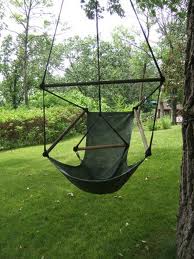
Skychair time.
Reading time.
Writing time.

They are easily forgone because of the must-do-things life is currently bogging me down with; and because I am so bogged down, those wants get shoved further and further into the back seat. I've given myself up to those musts. As the saying goes, All work and no play makes Jane a dull girl.

You do it. We all do. I bet you're doing it today. Responsibility should not be shirked, but neither should we sacrifice ourselves completely. So this is my battle cry to you all: Do something for yourself today.

Take half an hour to read a few chapters in that book that's been sitting on your bedside table for weeks. Go for a walk--not for exercise!--but to simply enjoy the sunshine, or the rain. Write. Open up that file or notebook and let the words building up behind all the must-dos out! Play with your dog, your cat, your kids, your significant other, yourself! Have a glass of wine, a cup of tea, a piece of chocolate.

Breathe.
Enjoy.
Don't just take the time, appreciate it.

The moment I finish this post, I'm going out to the skychair without my laptop, even though I have an edit to finish. I'm going out with the book I've been trying to read, because I'm really enjoying it, and I deserve thirty minutes before running off on the next errand to enjoy it.
So what I want to know from you, right here-right now, is...
What are you going to do for yourself TODAY!
If you leave it in comments, you must do it; you will do it! There's magic in that. I promise.

Monday, June 4, 2012

Summer Reading!


This will come as no surprise to anyone that I loved to read as a kid, and the best time to read was summer vacation. I played outside with friends plenty, but some of my favorite moments were spent lying on the couch, stretched out on my bed, or on a lounge chair outside, taking a break with my favorite characters. I spent many a lazy summer with Judy Blume and Beverly Cleary. The summer before my seventh grade year I read 1001 Arabian Nights. The next summer I spent with Douglas Adams and Joyce Ballou Gregorian’s excellent fantasy trilogy, now long out of print. In high school I discovered romance novels, David Eddings, Stephen King, and so many more. The joy was in the discovery of new authors, new stories, new worlds.

Summer has come around again, and now that I’m done teaching for the semester, I can’t wait to get reading! This year my list is full of books that have been collecting beside my bed for months. Here’s a list of the top five I’m most eager to open and explore:

1. Insurgent by Veronica Roth. The second novel in a dystopian trilogy, Roth’s future Chicago is divided into sectors defined by values. It seemed like an odd premise when I first picked up Divergent last year, but the first novel in this series was well written and thoroughly engaging. It rivals Hunger Games, and it some ways, is even better.


2. Beyond the Gate by Terri-Lynne DeFino. I’m bragging here, but I get to beta read Terri’s forthcoming novel this summer. Woot! If you haven’t read Finder and A Time Never Lived, you are missing out on some phenomenal summer reads, with unique, non-European inspired worlds and well-drawn characters you will fall in love with.


3. The Kingdom of Gods by N.K. Jemisin. I’ve been looking forward to reading this, the third book in Jemisin’s Inheritance trilogy, since I picked it up at World Fantasy last November. Her unique fantasies and worlds are inspiring, her characters rich and engaging, the writing beautiful.


4. Starters by Lissa Price. I received a chapter sample of this book at World Fantasy. My fifteen-year-old picked it up and bought the book as soon as it came out. Another dystopian, this novel posits a future in which the elderly can “rent” the bodies of young men and women in order to experience youth again. The premise is fresh and different, and my daughter recommended it, so I think I have to read it!


5. Timeless by Gail Carriger. This is the final book in Carriger’s Parasol Protectorate series, which is a steampunk/ paranormal/ comedy of manners/ mystery set in 19th century London. Vampires, werewolves and soulless, those who can negate paranormal powers with a touch, abound in London’s high (and low) society. Alexia Tarabotti, wife of a werewolf and friends of vampires, is an Austen-esque heroine with a cool head in a crisis and plenty of wit.


If none of these appeal, I’d also highly recommend the fantasies of some of our summer guests, who are also on the list of my favorite authors:

June 25th: The Psalms of Isaak series by Ken Scholes is high on my list of all-time favorite fantasy series. Start with Lamentation, read Canticle and Antiphon, then wait on pins and needles for Requiem with the rest of us.


July 23rd: Dorothy Hearst’s Wolf Chronicles are a fantastic summer read for paranormal fans and animal lovers alike. Who doesn’t love wolves?


July 30th: Sharon Shinn’s Twelve Houses series is a fantastic blend of fantasy and romance, with strong female characters and phenomenal worldbuilding.


August 13th: Jim C. Hines, our final summer guest, re-envisioned storybook princesses as kick-ass heroines long before Once Upon a Time and Snow White and the Huntsman. His damaged but awesome Sleeping Beauty is probably my favorite.


Now a question for all of you, gentle readers: what are you reading this summer? Sound off!

by Kim Vandervort