Monday, February 27, 2012

A Fantasy Reader's Demands

Up on Heroines of Fantasy this week, our first male blogger for the spring! Peadar Ó Guilín is a writer of YA fiction out of Dublin, Ireland. His first book, The Inferior ranked among the very best books I read in 2010. It is available in the US. His second book, The Deserter, will be available in the US on March 12th! For more information on Peadar and his work, click on the name-ticky up there. Unless the Nork has incapacitated him again, he'd love to hear from you.

Dear Fantasy Writers,

I'm a writer too and what I want, is to be remembered. Oh, I'm not talking about eternity here. What I mean, is that five minutes after you have finished reading one of my stories, you'll still be able to tell a perfect stranger what it was about.

A humble ambition, you might think, except I suspect that like me, you have wasted far too much time being mildly entertained instead of thrilled.

People read our work for different reasons: some like wizards; some *want* to be wizards, or thieves or dragons. There are fantasy fans who dream of escape to what they imagine were simpler times, when people had purer motives and better dance moves.

But for me, the true power of the genre lies in its name.

Fantasy means "imagination". It is creativity gone wild, or rather, that's what it should be. As a reader, I enjoy the tropes, but deep inside, there's a part of me that yearns to be astounded. I long to use the word "marvel" again and again in superhero-free sentences.

Science Fiction writers do this to me all the time, or they aspire to it anyway and it blows my mind that so many fantasy writers are content to let their genre cousins steal this crown right from under their noses.

But there's profit in old rope, isn't there? Perhaps it's no accident that SF sales keep shrinking, their shelf space collapsing before a never-ending stream of dragon-this or dragon-that.

Which is not to say I have anything against dragons! Or any other trope you might name. The important thing, for me, Peadar the Reader, is that when you use tropes, you twist them so hard that my lazy eye finally uncrosses; that I forget to go to the bathroom until I embarrass myself; that my coffee goes cold in the flask. That's all I want. Something new. Something amazing.

Oh, I'll still visit ye olde medieval kingdoms from time to time, like so many branches of McDonalds, because, well, when I'm hungry, I'll plug the gap with whatever comes to hand and... and Good for you! McDonald's do great business and not everybody can blow minds with every steaming plate that comes out of their kitchen.

But I want you to try. I insist on it. This is my demand and it is non-negotiable.

Or maybe you'd prefer for me to forget you while I'm still reading your book?

Monday, February 20, 2012

What's the Weather Like?

Hurricane and Sun by Alexis Rockman, 2006

Perhaps it’s because I’ve lived the majority of my life in sunny, moderate climates without significant weather changes, but any kind of weather—particularly in the extremes—makes me cranky.  I detest snow.  It may look pretty, all white, fluffy and innocent on the ground, but I’m not fooled.  Snow is cold, wet, icy, and like to make one utterly miserable once it crusts up and turns to ice and sludge.  When it gets dirty, snow just looks tawdry and sad, like a hooker past her prime.  And it sneaks up on you.  I switched colleges simply because I could no longer tolerate the invisible black ice that coated the walkways and forced me to slide to my classes on my ass. 

Don’t get me started on rain, either.  A light mist frizzes my hair and makes me sticky; a downpour, as far as I’m concerned, is a fantastic reason to close schools and businesses and stay off the road, because nobody can drive in it anyway.  High winds?  Annoying, and there always seems to be one blowing on a rare good hair day.  Excessive heat?  Just fine, as long as I can stay indoors with the A/C.  Bitter cold (in Southern California, what I call any temp below 60 degrees)?  Give me a blanket, preferably heated, a fire, up the heater to at least 70, and pour me a hot chocolate.  Earthquakes I can handle; weather, of all but the pleasant, sunny-with-a-slight-breeze sort, I can’t.

Given my general attitude weather as a necessary evil, it’s no wonder that I tend to notice the weather (or lack thereof) in both the books I read and what I write.  And what I’ve found is that weather, in fantasy, seems to fall into one of three basic categories:

                1) Weather is present to characterize a place.
                2) Weather sets a mood.
                3) Weather is there to make the characters 
                     really uncomfortable.

Most authors who incorporate weather usually touch on at least one of the three.  On Anne McCaffrey’s Pern, dragons battle the thread that falls from the sky and burns like acid.  In my books, I tend to throw a rain or snow storm at my characters whenever I either want to make them miserable or slow them down.  George R. R. Martin probably makes the most effective use of weather, utilizing it for all three of the above purposes.  From the outset of Game of Thrones, the Stark words winter is coming prove foreboding and foreshadowing in a myriad of ways.  The winter is both an actual turning of the seasons and an indicator of trouble to come.  In contrast, the sunny, humid south feels just as unpleasant as the constant snows of the north.  I love how Eddard Stark is constantly changing his sweaty tunic for a fresh one.  He can’t stand the heat any more than some of the other characters can withstand his frozen north.  The weather impacts the characters emotionally and physically, and sets a tone for the series.

Fishermen upon a Lee Shore, in Squally Weather
by Joseph Mallord William
I have noticed, though, that Martin is singular in his use of weather.  Many of the novels I have read in the past year don’t really seem to have weather at all, particularly the YA dystopian novels I tend to favor of late.  Their characters must all live here in SoCal, where the occasional mild rain inspires the annual “StormWatch: 2012” and nobody seems able to drive the freeways safely.  Even though I’m generally pro-sun, the absence of weather in fiction bothers me.  It makes the worldbuilding less vivid, less realistic.  Because let’s face it: love it or hate it, weather happens.  And weather, as we have learned from the tragedies of the tsunami in Thailand and Hurricane Katrina, can be one of the most destructive forces on earth.  The wind alone can shape canyons over time, crumble ships like bath toys, level cities and decimate populations. 

So tell me: what’s the weather like in the books you’re reading or writing these days?  How is weather used (or not)?  Does it enhance or detract from the plot and worldbuilding of the novel?  What are some of your favorite uses of weather in fiction?

Monday, February 13, 2012

Heroes in Love

In the film Agora, Orestes of Alexandria loves the mathematician
and philosopher Hypatia.  Orestes is a worthy hero, but he will
not win Hypatia's heart. Nor will he save her life.
This week on Heroines of Fantasy, we’re going to talk about heroes. 

Now, don’t worry – the heroines won’t be left out of this discussion.  They can't be.  After all, in matters of love it takes two to tango.  (Or three, or more, if you and/or your characters are living the Chinese curse of having an interesting life…) So when we talk about how our heroes love, we must at least make reference to the heroines who have captured their hearts.

It’s a common complaint that female characters in fantasy have historically been confined to the role of Romantic Interest for the Hero.  She waits on the sidleines while he proves his worth, and her everlasting love will be his reward when all the manly adventures are over and done.  Scenarios like this one have rankled readers -- especially women readers – because they so often undermine the potential of female characters to reflect the true complexity of real-life women.

I am of a mind that clichés like this not only shortchange our heroines, they also shortchange our heroes.  By giving the heroes of fantasy an inordinately simple path to romantic fulfillment, we impoverish their characters, allowing them to escape the true complexity of real-life men.

Now, maybe this is what many are looking for in fantasy.  There’s probably more than one person out there who has finished that engaging book, or gone home (or to the bar) after that entertaining movie, and thought, “Wow.  If only the rules were that straightforward.  Slay the kraken; win the girl. Now that’s a world I wouldn’t mind living in…”

Whether or not your taste is for uncomplicated love in the context of fantasy, I’m going to ask you to indulge me this week and talk about male characters who experience the reality of love in our fictitious worlds. 

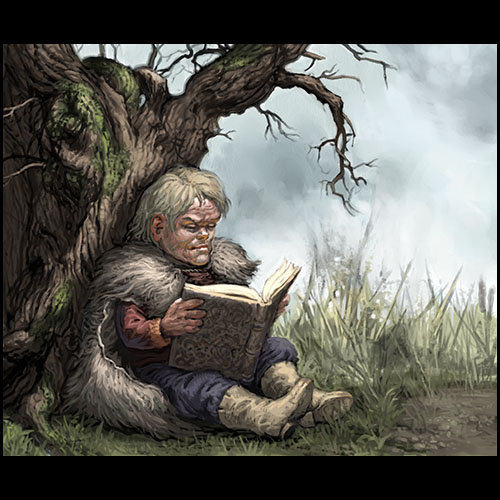
Tyrion Lannister, by Rafal Hrynkiewicz
To get the discussion started, I’ll put someone forward that not everyone would expect to find in the romantic hero pile:  Tyrion Lannister, from George RR Martin’s A Song of Ice and Fire. Tyrion can be devious and cruel.  He is bookish and ugly.  (Ugly in the novels, not in the HBO series.)  No one expects him to ride to the rescue in a suit of shining armor.  Yet he is in his heart of hearts a romantic.  He has a well-hidden soft spot when it comes to women, and a great need to experience love.  We see this in his relationship with Shae; we hear about it in the bitter memories of his ill-fated marriage to Tysha. The discord between Tyrion’s romantic inclinations and the reality in which he lives is a source of constant tension; and it is one of the many threads that makes Westeros feel like a real place in history.

There’s my example.  Now it’s your turn.  Talk to me about heroes in love. Real love, in all its beauty and cruelty, with all its nuances, inconveniences, uncertainties and confusions. Who are these heroes?  How have they loved?  Who have they loved?  Did they get the woman in the end?  (If it was ‘real’, they probably did not.  But I’d like to know…unless, of course, the reveal would involve too many spoilers.) 

And here's something else to think about as the discussion moves along:  As we break boundaries in the ways our female characters live, are we also breaking boundaries in the ways that our male characters love? 

I look forward to hearing your thoughts.

Posted by Karin Rita Gastreich

Monday, February 6, 2012

A Tale of True Love for Valentine's Day

Valentine's Day. How the heck did a defiant priest become the basis for a holiday of lovers, celebrated with hearts and candy and engagement rings? There are many, many legends. My favorite claims that Valentine was jailed because he defied Emperor Claudius by marrying young men and women against the law--a law that said no young men were allowed to marry (in an attempt to boost numbers in his army.) On the eve of his execution, Valentine wrote "the first Valentine" to his beloved, his jailer's daughter (whom some legends claim was healed of her blindness by the saint) signing it, from your Valentine.

As that story goes, and all stories of Valentine, the man was executed and thereby martyred, attaining eventual sainthood. I don't like that ending. Not at all. Therefore, in Heroines of Fantasy tradition, we're going to turn things around a little and make it our own. Using this picture and the basic Valentine legend above, let's rewrite the story, and this time let Valentine LIVE!

Same rules as last time: FIVE LINES ONLY! No cheating. Please do not be offensive. Sex and/or violence is allowed, but please don't get too graphic. Posting ends midnight on Saturday, February 11th. I'll conclude with the last five lines, and post the whole collective story on Sunday, February 12th.

(picture removed)

And so it begins: the story of a boy and a girl, and love unattainable; at least, that is what their kin wanted them to believe. Her name was Adalaide, a maid small and slight even for her kind. He was Valentine, his temper wicked even for his. They met in the wood. They fell in love; and turned the world upside down.

Now it's your turn...

Monday, January 30, 2012

The Vilification of Wool

If you would be so kind as to indulge me, I'd like to take a moment to introduce Jodi Meadows, our guest blogger this week. I've been following Jodi's blog for a long time. I watched her transition from slush reader to full-time writer, to published author. It has been an exciting experience, even from the sidelines. I'm not just a fan of her writing, I'm a fan of HER. But I promised not to embarrass her, so I'll let it go there.

Jodi's first novel (of a trilogy), Incarnate releases out into the world tomorrow, January 31.

Ana is new. For thousands of years in Range, a million souls have been reincarnated over and over, keeping their memories and experiences from previous lifetimes. When Ana was born, another soul vanished, and no one knows why...

Newberry Award Winner, Robin McKinley says: "Incarnate has an eerie and intriguing premise..."

New York Times bestselling author, Rachel Hawkins called it, "...lyrical and thought-provoking...the kind of book that stays with you long after you've turned the last page."

Award-winning author of the Shade trilogy, Jeri Smith-Ready called it, "...breathtaking, heart-melting, soul-feeding, mind-blowing..."

And not only is Jodi an amazing storyteller, but she's mistress of all things knitted and wool, and quite committed to the medium, as her guest post will attest. Enjoy!

****
The vilification of wool in fiction must be stopped.

Bold statement, I know, but how many times have you read about a character pulling out a "rough woolen blanket" or wearing "scratchy woolen clothes?"

My friends, this must stop. Yes, there is scratchy wool, but why wear it when there's so much snuggly soft wool available? Why force carpet wool (it's a thing!) on characters you already mistreat for the sake of plot?

As I write this post, I have within reach no fewer than ten woolen objects -- and none of them are scratchy or rough. Several pair of fingerless mitts knit out of Merino wool, a few knit out of BFL wool, one pair knit from Falkland wool. Let's not forget the Merino and silk hat I'm wearing, or the Corriedale wool I have on a spindle.

Of those, the Corriedale is probably the roughest, but it's still soft enough to use for socks or perhaps a hat if one doesn't have a sensitive head.

Let's do away with adjectives like "rough" and "scratchy" for wool. Some wools certainly are rough and scratchy, but if you want to hurt your characters with wool, why not ruin their favorite pair of mittens? (Doable in a variety of ways, from felting them in the washing machine to the terrible death of wool moths.)

Instead, let's embrace adjectives like "smooth" and "soft" and "warm." Heck, even "squishy" and "snuggly." All these words apply to many breeds of wool.

And did you know that wool is flame-retardant? Indeed, while wool will catch fire, it does not stay on fire. Flames quickly go out.

Another thing: wool is one of the only fibers you want to keep wearing if you fall into a freezing lake and have no change of clothes. (A real danger in fantasyland!) With most other fibers, like cotton or nylon, you're better off being naked. Can you believe it? NAKED. But wool -- wool is warm even when it's wet. Wool will save your life.

Fantasy and YA books often have messages of tolerance. What makes wool any less deserving of that message, especially considering its many virtues?

This is a real issue, my friends. Let's do something to correct it. I've tried to do my part in my debut YA fantasy/dystopian INCARNATE. The protagonist wears as much wool as possible, including mittens, hats, scarves, socks, shirts, and even pants. (But not underpants, because some things are just wrong.) Wool is a comforting.
I challenge you to do the same in your fiction. Let's stop the vilification of wool.


Jodie Meadows lives and writes in the Shenandoah Valley, Virginia, with her husband, a Kippy*, and an alarming number of ferrets. She is a confessed book addict and has wanted to be a writer ever since she decided against becoming an astronaut. Her debut YA fantasy/dystopian is Incarnate, coming January 31 from HarperCollins/Katherine Tegen. Order on IndieBound! Incarnate, by Jodi Meadows

*Kippy is a cat along the line of Crookshanks or the Cheshire Cat--a character in her own right, and often one who steals the show.

Monday, January 23, 2012

A Plague on Both Your Houses: A Guest Blog by Athena Andreadis


Don’t you know
They’re talkin’ ’bout a revolution
– Tracy Chapman
In James Tiptree’s "Houston, Houston, Do You Read?" three male astronauts are thrown forward in time and return to an earth in which an epidemic has led to the extinction of men. They perceive a society that needs firm (male) guidance to restore correct order and linear progress. In fact, the society is a benevolent non-coercive non-hierarchical anarchy with adequate and stable resources; genetic engineering and cloning are advanced, spaceships are a given, there’s an inhabited Lunar base and multiple successful expeditions to Venus and Mars. One of the men plans to bring the women back under god’s command (with him as proxy) by applying Pauline precepts. Another plans to rut endlessly in a different kind of paradise. The women, after giving them a long rope, decide they won’t resurrect the XY genotype.
The skirmish in the ongoing war about contemporary fantasy between Leo Grin and Joe Abercrombie reminds me of Tiptree’s story. Grin and Abercrombie argued over fantasy as art, social construct and moral fable totally oblivious to the relevant achievements of half of humanity – closer to ninety percent, actually, when you take into account the settings of the works they discussed. No non-male non-white non-Anglosaxon fantasy writers were mentioned in their exchanges and in almost all of the reactions to their posts (I found only two partial exceptions).
I expected this from Grin. After all, he wrote his essay under the auspices of Teabagger falsehood-as-fact generator Andrew Breitbart. His “argument” can be distilled to “The debasement of heroic fantasy is a plot of college-educated liberals!” On the other hand, Abercrombie’s “liberalism” reminds me of the sixties free-love dictum that said “Women can assume all positions as long as they’re prone.” The Grin camp (henceforth Fathers) conflates morality with religiosity and hearkens nostalgically back to Tolkien who essentially retold Christian and Norse myths, even if he did it well. The Abercrombie camp (henceforth Sons) equates grittiness with grottiness and channels Howard – incidentally, a basic error by Grin who put Tolkien and Howard in the same category in his haste to shoehorn all of today’s fantasy into the “decadent” slot. In fact, Abercrombie et al. are Howard’s direct intellectual descendants, although Grin’s two idols were equally reactionary in class-specific ways. Fathers and Sons are nevertheless united in celebrating “manly” men along the lines demarcated by Tiptree.
As I’ve said elsewhere, I enjoy playing RPGs in many guises. But even for games – let alone for reading – I prefer constructs that are nuanced and, equally importantly, worlds in which I can see myself living and working. Both camps write stories set in medieval worlds whose protagonists are essentially Anglosaxon white men with a soupçon of Norse or Celt to spice the bland gruel. To name just a few examples, this is true of Tolkien’s Middle Earth, Howard’s Conan stories, Moorcock’s Elric saga, Leiber’s Fafhrd series, Jordan’s Wheel of Time toe-bruisers, Martin’s fast-diminishing-returns Fire and Ice cycle. The sole difference is approach, which gets mistaken for outlook. If I may use po-mo terms, the Fathers represent constipation, the Sons diarrhea; Fathers the sacred, Sons the profane – in strictly masculinist terms. In either universe, women are deemed polluting (that is, distracting from bromances) or furniture items. The fact that even male directors of crowd-pleasers have managed to create powerful female heroes, from Jackson’s Éowyn to Xena (let alone the women in wuxia films), highlight the tame and regressive nature of “daring” male-written fantasy.
Under the cover of high-mindedness, the Fathers posit that worthy fantasy must obey the principles of abrahamic religions: a rigid, stratified society where everyone knows their place, the color of one’s skin determines degree of goodness, governments are autocratic and there is a Manichean division between good and evil: the way of the dog, a pyramidal construct where only alpha males fare well and are considered fully human. The Sons, under the cover of subversive (if only!) deconstruction, posit worlds that embody the principles of a specific subset of pagan religions: a society permanently riven by discord and random cruelty but whose value determinants still come from hierarchical thinking of the feudal variety: the way of the baboon, another (repeat after me) pyramidal construct where only alpha males fare well and are considered fully human. Both follow Campbell’s impoverished, pseudo-erudite concepts of the hero’s quest: the former group accepts them, the latter rejects them but only as the younger son who wants the perks of the first-born. Both think squarely within a very narrow box.

Other participants in this debate already pointed out that Tolkien is a pessimist and Howard a nihilist, that outstanding earlier writers wrote amoral works (Dunsany was mentioned; I’d add Peake and Donaldson) and that the myths which form the base of most fantasy are riddled with grisly violence. In other words, it looks like Grin at least hasn’t read many primary sources and both his knowledge and his logic are terminally fuzzy, as are those of his supporters.


A prominent example was the accusation from one of Grin’s acolytes that contemporary fantasy is obsessed with balance which is “foreign to the Western temperament” (instead of, you know, ever thrusting forward). He explicitly conflated Western civilization with European Christendom, which should automatically disqualify him from serious consideration. Nevertheless, I will point out that pagan Hellenism is as much a cornerstone of Western civilization as Christianity, and Hellenes prized balance. The concept of “Midhén ághan” (nothing in excess) was crucial in Hellenes’ self-definition: they watered their wine, ate abstemiously, deemed body and mind equally important and considered unbridled appetites and passions detriments to living the examined life. At the same time, they did not consider themselves sinful and imperfect in the Christian sense, although Hellenic myths carry strong strains of defiance (Prometheus) and melancholy (their afterworld, for one).
Frankly, the Grin-Abercrombie fracas reminds me of a scene in Willow. At the climax of the film, while the men are hacking at each other down at the courtyard, the women are up at the tower hurling thunderbolts. By the time the men come into the castle, the battle has been waged and won by women’s magic.
So enough already about Fathers and Sons in their temples and potties. Let’s spend our time more usefully and pleasantly discussing the third member of the trinity. Before she got neutered, her name was Sophia (Wisdom) or Shekinah (Presence). Let’s celebrate some people who truly changed fantasy – to its everlasting gain, as is the case with SF.

My list will be very partial and restricted to authors writing in English and whose works I’ve read, which shows we are dealing with an embarrassment of riches. I can think of countless women who have written paradigm-shifting heroic fantasy, starting with Emily Brontë who wrote about a world of women heroes in those tiny hand-sewn diaries. Then came trailblazers Catherine Moore, Mary Stewart and André Norton. Ursula Le Guin’s Earthsea is another gamechanger (although her gender-specific magic is problematic, as I discussed in Crossed Genres) and so is her ongoing Western Shores series. Katherine Kurtz’s Deryni cycle is as fine a medieval magic saga as any. We have weavers of new myths: Jane Yolen, Patricia McKillip, Meredith Ann Pierce, Alma Alexander; and tellers of old myths from fresh perspectives: Tanith Lee, Diana Paxson, Marion Zimmer Bradley, Terri Windling, Emma Bull, C. J. Cherryh, Christine Lucas.
Then there’s Elizabeth Lynn, with her Chronicles of Tornor and riveting Ryoka stories. Marie Jakober, whose Even the Stones have haunted me ever since I read it. Elizabeth Marshall Thomas, whose heroic prehistoric fantasies have never been bested. Jacqueline Carey, who re-imagined the Renaissance from Eire to Nubia and made a courtesan into a swashbuckler in the first Kushiel trilogy, showing a truly pagan universe in the bargain. This without getting into genre-cracking mythmakers like Isak Dinesen (Karen Blixen) and Louise Erdrich.
These authors share several attributes: they have formidable writing skills and honor their sources even as they transmute them. Most importantly, they break the tired old tropes and conventional boundaries of heroic fantasy and unveil truly new vistas. They venture past medieval settings, hierarchical societies, monotheistic religions, rigid moralities, “edgy” gore, Tin John chest beatings, and show us how rich and exciting fantasy can become when it stops being timid and recycling stale recipes. As one of the women in Tiptree’s “Houston, Houston” says: “We sing a lot. Adventure songs, work songs, mothering songs, mood songs, trouble songs, joke songs, love songs – everything.”

Everything.

Athena Andreadis brief bio
Athena Andreadis was born in Greece and lured to the US at age 18 by a full scholarship to Harvard, then MIT.  She does basic research in molecular neurobiology, focusing on mechanisms of mental retardation and dementia.  She is an avid reader in four languages across genres, the author of To Seek Out New Life: The Biology of Star Trek and writes speculative fiction and non-fiction on a wide swath of topics.  Her work can be found in Harvard Review, Belles Lettres, After Hours, Strange Horizons, Crossed Genres, Stone Telling, Cabinet des Fées, Bull Spec, Science in My Fiction, SF Signal, The Apex Blog, World SF, The SFF Portal, H+ Magazine, io9, The Huffington Post, and her own site, Starship Reckless.


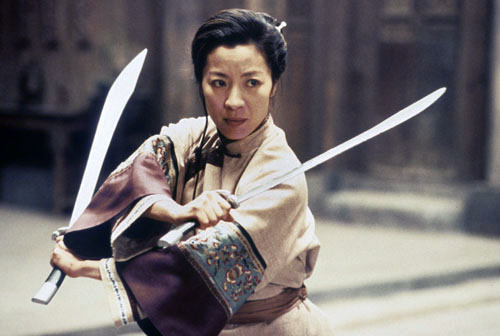
Images: Éowyn, shieldmaiden of Rohan (Miranda Otto) in The Two Towers; Sonja, vampire paladin (Rhona Mitra) in Rise of the Lycans; Yu Shu Lien, Wudan warrior (Michelle Yeoh) in Crouching Tiger, Hidden Dragon.

Monday, January 16, 2012

A Fantasy for All Seasons

My birthday was last Thursday and, as this annual occurrence is timed so nicely with the new year, I am yet again presented with the opportunity to wax nostalgic.  That, combined with our first Monday’s discussion about C.S. Lewis’s Narnia books, has started me thinking about how fantasy shapes the seasons of our lives.

I must have ordered the Narnia books off of the Scholastic book flyer, because the whole set came to me at once, in all of their new-book-smell and glossy-cover glory.  In those days, The Magician’s Nephew was still last of the set, not first, and I had not a single clue about the Christian allegory.  My favorites, for no explicable reason, were The Lion, the Witch and the Wardrobe, The Voyage of the Dawn Treader, and The Silver Chair.  My gateway drug to fantasy, they introduced me to new worlds and places I could only imagine; I thirsted for more. 

Then, in fifth grade, I made an amazing discovery in my elementary school library: Anne McCaffrey’s Dragonsinger.  Once I realized that my mom had all McCaffrey’s books on our bookshelf at home, I read every novel of hers I could find.  Then I moved to the other books on my mom’s bookshelf, which was chock full of fantasy.

If I hadn’t been a fantasy reader by then, eighth grade would have sealed the deal.  My English teacher assigned T.H. White’s The Once and Future King, and a deep and abiding love of all things Arthur nestled deep in my soul, right next to the dragons.  I read other Arthur books, too, a few of which I’ve searched for ever since.   I discovered David Eddings, one of my all-time favorites, and the out-of-print “Tredana Trilogy” by Joyce Ballou Gregorian, which I am afraid to re-read.  From then on, knights, wizards, gods, magic, and the ideal of a better world captured and held my imagination.

Fantasy became my dirty little secret during high school and college.  I was not going to be a geek, so to the general  public I was a wholesome, outgoing, all-American teenager.  Who knew that I played Warhammer in the back room of my friend’s house and wrote Pern fanfic for Star-Rise Weyr?  And NOBODY knew that I would occasionally pick at that old story I’d started during middle school.  That was for me alone.


Of course, my secrecy only lasted a few years.  During a Medieval Literature class in college, I had an epiphany: I could read King Arthur myths in college?  I felt like I was getting away with some elaborate scheme.  I was going to study the very roots of modern fantasy, and the University was going to give me a college degree in exchange!  My scheme persisted through my M.A. in Medieval Literature and cemented my fate.  Not only could I now read and discuss fantasy, I could pick at the author’s historical accuracy.  And eventually, when I was ready, I discovered The Lord of the Rings, and appreciated all of the complexities and subtleties of Tolkien’s amazing world.

Fantasy has formed a significant portion of my personality and worldview.  I no longer care that I’m a fantasy geek—which is ironic, because becoming a geek is so much more cool and mainstream.  The benefits of reading fantasy have far outweighed any drawbacks to my social life or character: I have a rich imagination, a strong vocabulary, and the ability to appreciate political, religious and social systems completely foreign from my own.  I appreciate people of all different races, cultures and ethnic backgrounds, and my mind is open to new possibilities, both in fiction and in life.  I believe I am a better person, more open-minded and less prone to a black-and-white worldview because of fantasy. 

I did try to reread the Narnia books a couple of years ago, and found them thin in plot and character, overbearing in religious message.  It made me sad to have my sense of wonder stripped away, and I wish now I hadn’t reread them, that I could always hold them in my heart with the same charm they once held for me.  Still, I will never forget how they shaped me on this journey to become the reader and writer I am today.

Looking ahead, I expect I will find new fantasies that engage me as an adult.  Eight years ago I tried Game of Thrones and felt it too dark; now I watch the series and see not only the darkness, but the varied shades of grey.  Life changes me, changes not only what I want to read, but what I need to read.  And what I read, in turn, changes me.

Now here is my question for you: how has fantasy shaped you as a reader, and as a person?  And how has your taste for fantasy changed with the seasons of life?